What we take from our mothers, and how we tell it apart from the women we decided to become.
You can't see the pink. It was there.
Editor's Note
Seven pieces this week, on what we take from our mothers and how we tell it apart from what we chose.
The first three are about evidence — why your sister remembers a different woman than you do, why the mother who loosens at eighty is probably not a new person, and why a mother sometimes becomes most meaningful to us only once we have had a problem she actually had. The next two are about sorting: what we absorbed without noticing, and what we are entitled to keep from a relationship that was necessarily complex. Our mothers are entitled to the same.
The last two are mine. One is about my mother, and one is about a grandmother I never met and am only now going looking for.
This issue was finished in one life and published in another. I have not tidied it up to account for that.
Sisters remember different mothers because each of them received a different woman — the discrepancy is usually a fact about position rather than a failure of anyone's memory.
Every account of a mother is testimony from a single seat. Knowing which seat you were in is the beginning of the work.
You can't see the pink. It was there.
Paula's maternal grandmother liked to tell her granddaughters about the motorcycle.
She would get on the back of a boy's bike wearing his leather jacket, and — this was the part she delivered with relish, every time — nobody did that then. Not girls she knew. Not in that town. She told the story often enough that it became one of the fixed points her granddaughters had on her, the kind of detail that survives a person by decades.
Her daughter hung sleigh bells on the front door to hear her own teenager come home after curfew.
The obvious question is what happened between those two women. The more useful question is smaller: was that story ever hers?
She heard it, certainly. She sat in the room while her mother told it to her daughters, more than once. Whether it was ever told to her alone — at seventeen, say, when it might have meant something entirely different — no one knows. And what she thought while she listened, no one asked.
That gap is not incidental. It is the ordinary condition of every family, and it explains most of what looks like disagreement about who a mother was.
A grandmother has no assignment with respect to her grandchildren. She has no curfews to enforce, no character to build, no consequences to administer. She can be the woman on the motorcycle, because being the woman on the motorcycle costs nothing and delights everyone. Her daughter met a different person entirely — someone who was, during the relevant years, on duty. Both women were real. Neither performance was insincere. They were addressed to people occupying different positions.
Extend this and it accounts for the rest of the family's records. The eldest daughter met a young mother with no idea what she was doing. The youngest met a woman who had done it four times already and had run out of both anxiety and energy. A son met someone who treated him differently, whether or not anyone in the house would have admitted it. A daughter-in-law met a woman with something to prove. A best friend of sixty years met the one who existed before any of them arrived and never entirely stopped existing.
There is no view of a woman from outside her relationships. There are only the seats.
There is no view of a woman from outside her relationships. There are only the seats.
Behavioral geneticists arrived at a version of this from another direction entirely. In 1987 Robert Plomin and Denise Daniels published a paper asking why children in the same family turn out so unalike, and concluded that the environmental influences that shape us are handed out child by child rather than household by household — that two siblings raised in the same rooms can end up roughly as different from one another as two people drawn at random. Their own example lands close to home: a divorce happens to every child in a family, and it is a different event for each of them.
Which is why the exercise families attempt after a death — comparing notes, reconciling accounts, determining what she was really like — does not work, and should not. The sister who remembers being adored and the sister who remembers being overlooked are not contradicting each other. They are reporting accurately from two different chairs at the same table. The instinct to resolve this into a single official version is understandable; it is how families produce something to say at a funeral. But the official version is the least accurate document the family will ever generate, because it is the only one nobody actually experienced.
Some families decline to produce it. Paula and her siblings will not coordinate what they will say at their mother's services, and not all will choose to speak. For those who don't, it is simply because what matters to them is the mother and the relationship that existed before her death. A relationship between two people that will remain theirs alone. For those who speak, nothing is lost by leaving their memories unaligned. What would have been lost is every version of her but one.
There is a second thing in the motorcycle story, harder to see.
If the sleigh bells were an answer to the motorcycle — if the daughter of a woman who did what nobody did decided her own household would be run differently — then that strictness was not simply a position. It was a reply. And a reply is as inherited as an imitation. To define ourselves in opposition to our mothers is still to let them set the terms; we have only changed the sign. This runs in both directions and it alternates, which is why the loosest woman in a family is so often the daughter of its strictest, and the reverse.
The caution is worth stating, because the tidy reading is right there and it is probably wrong. She may have found the story unremarkable — a mother's set piece, heard so often it registered as furniture. She may have loved it and never said so. She may also have heard, in a story about doing what nobody did, something considerably less charming than what her daughters heard, because she is the one who was raised by the woman on the motorcycle and they were not. Reading her silence as judgment is the same error as reading absence as indifference: it assumes the meaning ran in the direction that would be most significant to us.
So the accounts conflict and the interpretations are unreliable. What survives?
Repetition survives. A woman's testimony about herself varies with who she is speaking to, but the story she chose to tell over and over — across decades, unprompted, to anyone who would listen — was not selected by her audience. She selected it. And the same test applies to conduct: the thing she did again and again, at cost, when it would have been easier to stop, is a claim about herself made in a currency that cannot be performed cheaply. Together they are the self she elected, and the closest thing to a direct statement most of us will ever get.
Paula's grandmother chose: I did what no one did. Paula's mother chose something she demonstrated for years before she ever stated it — in the walker she refused to be defeated by, in the rehabilitation sessions, in the full-time work she was still doing at eighty-four — and then said plainly near the end: that what you do when life is hard is fight, and you do not ever stop.
Those are not memories. Those are theses. And a woman's thesis about herself is considerably more useful than her daughter's evidence about her, because it tells you what she was aiming at, which is the only part of a person that can be inherited on purpose.
Which suggests where this issue is actually going. The question of who your mother truly was cannot be settled; the seats are permanent and the witnesses are all correct. But that was never the answerable question. The answerable one is what you became in the presence of the particular version you were given — and unlike the first, that one is still open, and you are the only living witness.
Two
FAMILY · IDENTITY
She Was Not Transformed. She Was Released.
Most daughters form their lasting impression of their mother during the stretch of her life when she had the least room to be anyone in particular — which is why a mother who grows freer with age can seem like a different woman, when she is more often the same one, unassigned.
The woman who loosens at eighty is rarely new. She is the one who was there before the job started — and, in ways her daughter may have missed, during it.
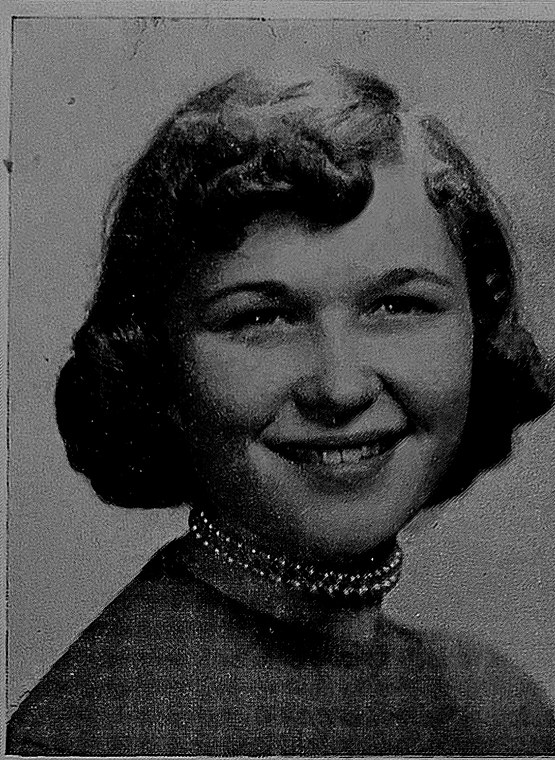
Yearbook photo. The girl before the mother.
Ask a woman to describe her mother and she will describe a woman between twenty-five and fifty-five.
That is the window her daughter had access to. It is also the single most constrained stretch of that woman's life — the years of small children, of other people's schedules, of a household producing a new emergency every eleven hours. Whatever she was doing with her own freedom during those years, she was doing it in the margins, after everyone was asleep, in a form her children were unlikely to notice.
So the daughter's file is complete, detailed, vividly remembered, and drawn almost entirely from the period when the subject was least herself.
Then the mother turns eighty and starts saying things.
She wears one color and announces it as an identity. She tells her granddaughter something she would never have told her daughter. She takes an interest in what she is wearing again, in a register that reads as slightly too young to anyone who has already decided what she is. The family calls this a change. Sometimes it is called a decline, which is a way of filing it without examining it.
It is more likely that nothing changed. The assignment ended.
Adrienne Rich drew this line in 1976, in Of Woman Born, and it has not been improved on since: motherhood as an institution — defined from outside, imposed on every woman who enters it — is a different thing from mothering as it is actually lived by a particular one. The daughter's difficulty is structural. For most of the years she was watching, the institution is most of what she could see.
Paula's mother married the summer she finished high school and had five children. At an age when her contemporaries were settling into the shape of their lives, she enrolled in college. She was not a confident returning student. She was intimidated by it, and openly unsure she could do it. She studied in the evenings at the dining room table. Four years later her class chose her to deliver the commencement address, and a married-at-eighteen mother of five stood up and spoke for all of them.
In the same period, the sleigh bells were on the front door.
Both ledgers are accurate. They are simply counting different people.
This is the part that gets lost. It was not a sequence — the strict years followed by the brave ones. The restriction and the reclamation were running in the same house, in the same years, in the same woman. She was monitoring her daughter's small freedoms while taking a much larger one back for herself, and no one in that house was positioned to see both at once.
Paula was eleven. What she experienced was a mother in the room and unavailable, which is a specific kind of absence children register with precision. Dinners went unmade. Interest in her days went unasked-for. Attention that had been reliably hers went somewhere else and did not come back for four years.
That was a real loss. It should be said plainly, because the pressure to say otherwise is enormous, and it intensifies considerably after a death.
A mother who has been perfected cannot be learned from. There is nothing left in the account to sort, and sorting is the whole of the task we have been handed.
So: the eleven-year-old was not mistaken. She was also not in possession of the full picture. Both of those hold, and neither cancels the other.
The fear is what connects them, and it is worth sitting with rather than resolving. A woman who is frightened of failing is not operating with her full capacity available. Fear takes up room. It consumes the attention that would otherwise go to a daughter's day at school. The same thing that made the act brave is the thing that made her absent — not two facts in tension but one fact with two faces. Understanding the mechanism does not refund the dinners. It explains them, which is a smaller and more honest offer.
Many of us revise the child's ledger eventually, usually after carrying a comparable load ourselves; the recognition tends to arrive through the body rather than through insight. What is worth noticing is that a revision made once can be made again. Anyone who has re-entered her mother's studying as courage as well as absence has proved the second entry is available. There is usually more than one line that needs it.
And there is a later point in the ledger's life, less discussed. When the audience for a performance leaves, the performance ends. What lifts in a woman's eighties is often not her judgment or her standards but the requirement to model them for someone. Her daughter learns, somewhat uncomfortably, that she was the audience — that a good deal of what she took to be her mother's character was her mother's conduct in front of her.
None of this makes the strictness fictional. A mother who enforced a curfew enforced it, and her daughter is entitled to the memory. The claim is narrower: conduct under assignment is weak evidence of character, and most of us have been treating it as strong.
Which puts the reader somewhere specific. If she is between forty and sixty, she is inside her own constrained window right now. Her children — or her colleagues, or whoever is watching — are assembling the permanent record at this moment, out of the least representative years available. They will remember her tired. They will remember what she said no to. They will not see what she is doing after they go to bed, and they may resent it when they notice it at all. They will not be wrong to.
The useful conclusion is not that this is unfair, though it may be. It is that the middle is not the identity. If we cannot locate much of ourselves in our own week, we are not learning something true about who we are. We are learning something true about what is being asked of us.
It does stop being asked. And the woman who arrives afterward is rarely a stranger — she is the one who was at the dining room table the whole time, frightened, working, and costing her children something real to do it.
Three
FAMILY · IDENTITY
The Advice She Could Not Give a Child
A mother often becomes genuinely useful to us only once we have faced a problem she actually faced — because what she can offer an adult is not a rule but company inside a contradiction.
The woman who handed you right and wrong was giving a child the only version a child can use. The second version arrives later, and only if the two of you qualify for it.
A ten-year-old cannot use ambivalence.
Told that some promises are worth keeping and some are worth breaking, and that telling them apart is the work of a lifetime, she will hear noise. What she can use is a rule. So her mother gives her rules — this is right, that is wrong, we do not do that in this house — and the rules are delivered with a confidence the mother may not privately hold, because a rule delivered tentatively is not a rule.
This is competent parenting. It is also the origin of a charge some of us are still filing thirty years later: my mother saw everything in black and white.
Some mothers did. But a good number of them were simply supplying the version a child was equipped to receive, and we never distinguished between what our mothers believed and what they could transmit. We were issued the version appropriate to who we were at the time, and we have been holding it against a woman who no longer exists — if she ever did.
The second version exists. It arrives late, unevenly, and not for everyone.
What produces it is not our age. Turning forty is insufficient; so is turning sixty. What produces it is a qualifying experience — a difficulty the mother has actually had. Not a similar one. The same one. Widowhood, a failing business, a child in trouble, illness, divorce. Until then the two women are discussing the matter across a gap. Afterward they are discussing it from inside the same room, and the register changes without either of them announcing it.
This explains something that otherwise looks like temperament. Two daughters, comparable relationships, and one of them reaches the second version at forty-five while the other never does. It is easy to conclude that the second mother was harder, or the second daughter less generous. Often the truer explanation is that their lives never produced the same problem. Qualification is not something you earn by trying.
Paula's mother had been divorced. So had Paula. Two women in one family who had each ended a marriage — a qualification neither would have chosen and both possessed.
Congratulations are not a place to put grief.
What that made available was not advice. It was something more specific and considerably harder to find: permission to remain torn about a decision everyone else had already closed.
This is the particular loneliness of a divorce that other people approve of. When the consensus is that leaving was obviously correct — that he was impossible, that she should have gone years earlier, that everyone is relieved — the grief has nowhere to go. Sympathy is not offered, because the situation does not appear to call for it. Congratulations are offered instead. And congratulations are not a place to put grief.
A woman who has been through it will not argue you out of being torn. She knows the consensus was correct. She also knows it was beside the point, that the two facts sit side by side without resolving, and that what you are mourning is not the man but the life you had assumed you were going to have. She does not need this explained and she will not try to talk you out of it. That is nearly the whole of what she has to offer, and it is not available from anyone who has not stood there.
It is worth naming what has happened structurally, because it is the argument of this entire issue compressed into one relationship. The woman who installed the binary is frequently the same woman best positioned to help dismantle it. That is not hypocrisy on her part, and it is not the daughter finally seeing through her. It is a sequence. The rules were the child's edition. The complexity was always in the author.
Developmental researchers have a name for this shift. Margaret Blenkner called it filial maturity in 1965 and placed it in midlife — the point at which a grown child stops experiencing a parent as a function performed on her behalf and begins to receive her as a person with her own history and her own limitations. Later work disputes the timing. Corinne Nydegger argued it is gradual rather than a crisis, and Karen Birditt and her colleagues have since tried to measure it directly. What none of the research settles is how to bring it on deliberately, which matches what many of us find: it arrives through experience rather than through resolve.
The limits should be stated honestly. Some mothers never make the turn; a woman who has never examined her own life cannot offer company inside a complexity she has declined to enter. Some daughters run out of time — the qualifying experience arrives at fifty-eight, and by then there is no one to bring it to. And some pairs simply miss each other, two women who lived hard lives that never once rhymed.
Which brings up the part that is easy to leave out.
Even in the best version of this — the mother who turns, the daughter who is ready, the years of adult conversation that follow — the file does not close. You will not ask all the right questions. You will ask the ones that occur to you, in the order they occur, on the days you happen to have together, and you will discover the important ones later, usually after the answer is no longer obtainable.
That is not a failure of preparation. There is no complete version available. A mother is not a document that can be fully read, and the questions that matter most tend to become visible only once you have lived far enough to know they were questions. The doubt that remains is not the residue of a job done badly. It is the accurate shape of one person's knowledge of another.
What you are left with is partial, contradictory, and yours. It is also, for practical purposes, everything you were ever going to get — and it turns out to be enough to work with.
Four
FAMILY · IDENTITY
Not Her Beliefs — Her Procedures
What a daughter absorbs from her mother is rarely a set of beliefs; it is a set of procedures — and procedures stay invisible because they present as the obvious thing to do rather than as a position worth examining.
You can disagree with your mother about everything and still be running her software. Beliefs are the layer you have already examined.
Many of us have already done the ideological work.
We looked at what our mothers believed about marriage, or money, or what a woman owes her family, and we kept some of it and discarded the rest. The sorting tends to happen in our twenties and thirties, it happens in language, and it produces a clear result: I don't think that. I think this instead.
Then we are in our fifties, apologizing to a man who interrupted us.
The ideological audit is the easy one, and it is easy for a reason. Beliefs are stored in words. They can be stated, argued with, compared against evidence, and revised in an afternoon. Anything held in language can be reached by language.
The rest of the inheritance is not held in language.
It is held the way a golf swing is held, or the route to a childhood house — as a sequence the body runs without consulting anyone. Neuroscientists have had a name for the difference since 1980, when Neal Cohen and Larry Squire separated declarative memory, which stores facts and events and can be consciously retrieved, from procedural memory, which stores skills and habits, is built by repetition, and operates with no conscious access at all. They are different systems, in different structures of the brain. Only one of them can be argued with. What you do in the first half-second after someone raises their voice. How quickly you apologize, and for what. What you consider an emergency. Whether you open a bill the day it arrives or leave it on the counter for a week. What you do when someone gives you a compliment. How you enter a room where people are already talking. Whether you eat standing up. What you say when a stranger is rude to you, and what you say afterward, to yourself.
None of these present as opinions. They present as the way things are done, which is precisely why they survive an examination that was only ever conducted on opinions.
This is why we can spend three decades building a life in deliberate contrast to our mothers' and still recognize, in an unguarded moment, the exact cadence of her response to bad news coming out of our own mouths. Nothing failed. The rejection was real and it operated on the layer where rejection works. The other layer was never addressed, because it never came up for a vote.
Three tells make procedures visible.
The audit follows from the tells, and it has one rule that matters more than the rest.
A belief announces itself as a position. A procedure presents as the obvious thing to do.
Identify before evaluating. The strong instinct on noticing an inherited procedure is to judge it immediately — that's hers, and it's bad, and I'm getting rid of it. That instinct will corrupt the inventory, because anyone looking for her mother's flaws will find her mother's flaws and overlook the procedures that are working. Some of what was installed is excellent and was installed by someone who knew what she was doing. The sorting comes later, and it comes better if the list was made without a verdict attached.
So: for one week, note the moments of disproportion. Note the sentences that arrived without being composed. Note what happened on the worst day. Write them down without comment. At the end of the week, take each one and ask a single question — where did I learn this? — knowing the honest answer will sometimes be that we cannot tell, and that not everything traces to a mother.
What comes next is worth being realistic about, because most advice on this subject is not.
A procedure is not deleted. It was built by thousands of repetitions during the years the nervous system was most plastic, and it does not come out because we decided at fifty-four that we disagree with it. What is available is slower and more achievable: a gap. A few seconds between the reflex and the action. The dread still arrives; the apology does not automatically follow it. Over time the gap widens, and the procedure — still present, still firing — stops determining the outcome.
That is a smaller promise than the one usually made about this kind of work. It is also the one that holds up.
One more thing, because it is the easiest mistake to make from here. Refusing a procedure wholesale is not the same as being free of it. If our mother worried about money and we therefore decline to think about money at all, we have not escaped the procedure. We have inverted it, and it is still steering. The inversion is often harder to see than the imitation, because it comes with a sense of having chosen. Both the copy and the opposite were set by the same hand.
There is a further complication, and it runs the other way.
Transmission is nearly always described as descending — grandmother to mother to daughter, each generation handing something down. But the mechanism that installs a procedure is proximity and repetition, and proximity is mutual. A mother in regular contact with a grown daughter is also being trained.
What travels upward is rarely instruction. Adult daughters do not often persuade their mothers of anything, and the attempt tends to go badly for everyone. What travels is demonstration. A mother watches her daughter end a marriage, or decline to apologize for something that did not require an apology, or spend money on herself without assembling a justification first — and what she takes from it is not an argument. It is evidence that the thing is survivable. Permission moves by example in both directions.
Paula's mother told her, in her last years, that she had learned from her daughter to release anxiety about the things she could do nothing about. Anxiety was a trait the two of them shared — one of the most legible procedures either of them ran, and one that had descended rather than arisen. What matters is what happened afterward. When Paula was the one worrying about something she could not affect, her mother would say it back to her.
That is the complete circuit. A procedure travels down. A correction to it travels up, by demonstration rather than by argument. The correction then returns as instruction, in the mother's voice, carrying an authority the daughter's own version of it never had. The person best placed to hold us to our own principle may be the one we handed it to.
Most of this stays invisible from the daughter's seat, which is consistent with everything else about seats. We are usually the last to learn what our mothers took from us, partly because mothers of that generation seldom narrate it, and partly because our model of her was built early and updates reluctantly. When it is said out loud, it tends to arrive as news. It is entirely possible to spend twenty years believing we are the only one in the relationship who has been changed by it.
Which leaves a question worth holding open rather than settling. When a woman in her eighties becomes freer, bolder, more recognizably herself — how much of that is release, and how much of it is something she learned by watching her daughter?
What remains, after the inventory is made and the verdicts are still pending, is a list of things we do that we did not decide to do. Some of them we will want to keep. Sorting that is a separate task, and it is the one that determines what she is actually carrying forward.
Five
FAMILY · IDENTITY
What You Take From the House
We can keep one quality from a mother who hurt us without endorsing her, softening the record, or deciding the rest of it was fine — the same way we can take the good knives out of a house we were unhappy in.
Sorting a mother's belongings is a task most of us face eventually. Sorting what she installed is the same job, and it follows the same rules.
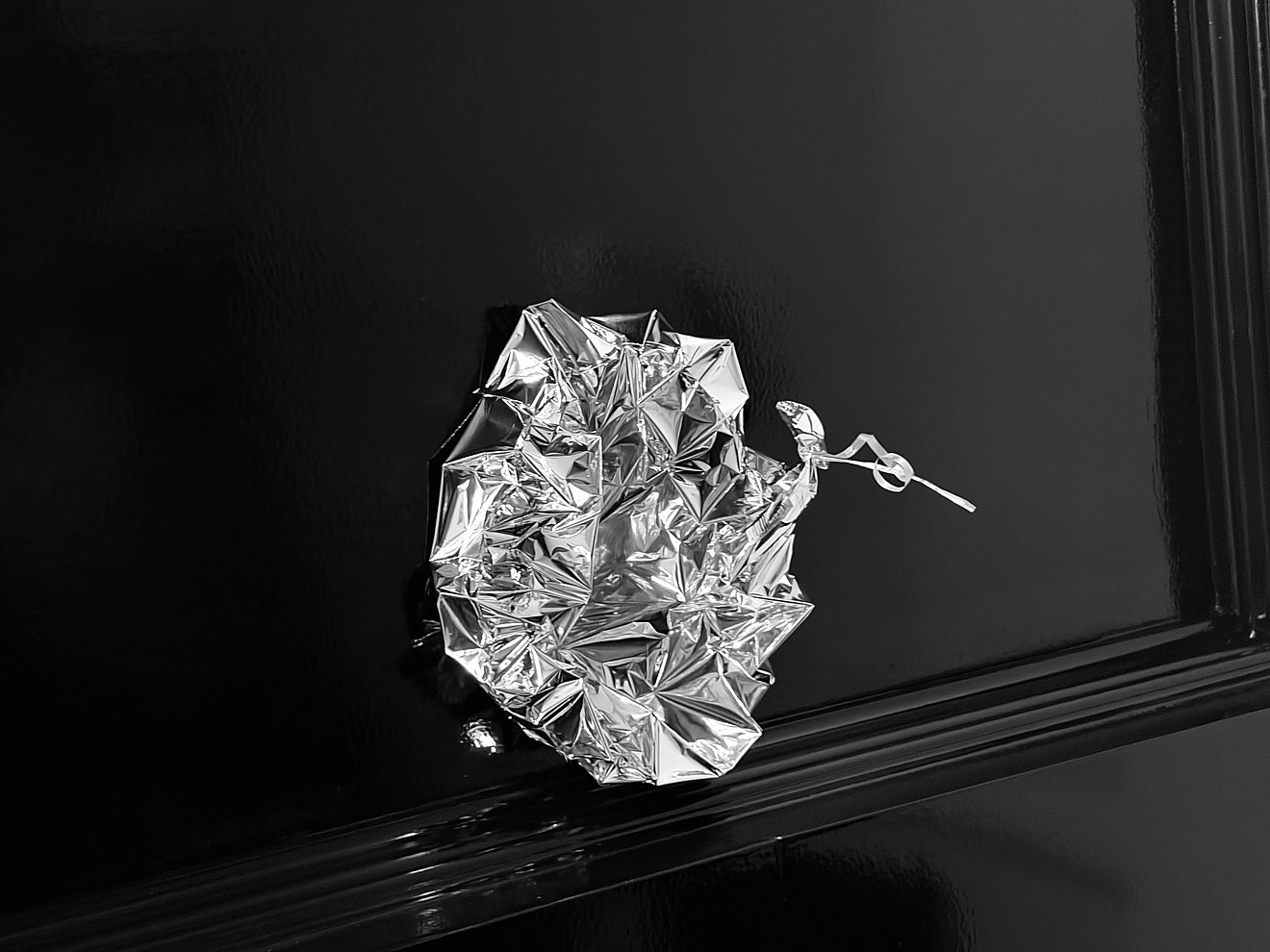
The last balloon from her room
Piece Four produced a list. This is the harder part, and it is easy to arrive here holding a belief that makes it impossible: that taking anything from a mother who hurt us means accepting all of her.
That belief leads two places, and some of us have been to both.
The first is to take nothing. If accepting one thing means accepting everything, the safe move is to refuse the lot — which leaves us defined by our mothers in the negative, and short of capacities we could have used. The second is gentler, and it comes easily after a death: decide the house was beautiful. Revise the record until she is someone worth having learned from, and the inheritance becomes acceptable in retrospect. The first costs us something useful. The second costs us the truth, and with it any real ability to sort.
There is a third way through, and we already know how to do it, because we have done it with objects.
You go into the house. You are not obliged to love the house. You take the roasting pan that has been perfect for forty years and the sewing scissors that cut better than anything sold now. You leave the furniture. You throw out the spices. No one watching believes that taking the scissors says anything about the marriage that happened in those rooms, or about the childhood, or about what was said in the kitchen in 1979. It is someone deciding what is worth carrying, in a house that held good tools and a great deal else.
The same operation is available on everything a mother installed. Her competence with money. Her physical courage. The way she spoke to people who were serving her. Her refusal to be embarrassed in public. Any of it can come out of the house without a word said about the rest.
Admiring one thing about a mother who hurt us on some days can feel like a betrayal of the girl who lived with her. It isn't. The girl keeps her account. The woman keeps the scissors.
What makes the sorting possible is a fact that is easy to state and hard to hold: she was a person. Not a role, not a verdict, not the sum of the worst thing she did. People are mixed. She may well have hurt us and loved us — not in sequence, but in the same years, sometimes in the same afternoon. Both entries are true, and neither cancels the other.
There is no category to place her in. There are only days. Days she hurt us, days she didn't, and a great many that held both before dinner. Any label large enough to cover a whole mother is going to be wrong about most of the days it covers.
And she was entitled to her own sorting. There were parts of herself she kept out of the relationship — things she never told us, versions of herself we were not shown, whole decades she declined to narrate. It is tempting to read those omissions as evidence withheld from us, as though we were owed the complete file. We were not. She was allowed to keep something back, for the same reasons we are: because some of it was not ours, and some of it she was still deciding about, and some of it she simply did not want to hand over. A relationship this complex entitles both women to that.
She may well have hurt us and loved us — not in sequence, but in the same years, sometimes in the same afternoon.
We also rarely know the full circumstances behind anything she did. What she was carrying. What she had been handed. What frightened her. What she had decided to keep to herself. Some of it we will never learn, and some of it she may never have understood about herself. None of that excuses anything. It is a reason to hold our conclusions a little more loosely than the evidence we happen to have would otherwise allow — and most of us would want that same standard applied to us, by people who never saw the whole of what we were managing at the time.
So the sorting asks for nothing sweeping. It asks something smaller and considerably more useful: that we let ourselves have the good part. That we take what she did well without first deciding the rest of it was acceptable, and without deciding our own experience of it was overstated. Both stay. The hurt stays exactly as large as it was. The good remains available to us in spite of it.
It is also a decision made alone. It needs no conversation, no acknowledgment, no apology, and no living participant. A mother who would have had opinions about being sorted through does not get to have them. That is one of the few real advantages of doing this after she is gone, and it is worth using.
There is a threshold, though, and it is the part usually left out.
Some houses you walk out of empty-handed. Where the harm was the substance of the thing rather than a feature of it, there is no obligation to go hunting for something salvageable so the story can end well. Advice that insists otherwise has mistaken generosity for duty. You are entitled to close the door, call whoever takes the rest away, and keep nothing at all. That is a complete and legitimate outcome, and anyone who reaches it has not failed at this.
Short of that, one question does most of the work.
Does this still function outside her house?
Some things do. Discipline about money is discipline about money; it works perfectly well without her contempt for people who have none. Other things do not travel. High standards can be genuinely valuable and can also arrive fused to a habit of withholding approval — and taking the standard as it stands means bringing the withholding along, usually pointed at our own children, or at ourselves. That one cannot be moved as it is.
It can often be remade. Take the stone out and reset it. Keep the standard, leave the withholding, and what results would not be entirely recognizable to the woman who supplied it. It is still inherited. It is no longer hers.
Two notes on bookkeeping, and then this can be handed over.
You do not have to say the house was lovely in order to take the knives. The rest of it stays exactly as it was — remembered accurately, described honestly, not sanded down to make the keeping permissible. Holding on to a mother's courage while remaining entirely clear about her cruelty is a more accurate account than resolving the two into a single verdict. The clarity is what makes the keeping safe.
And what we keep should be entered as hers. There is a quiet laundering that happens here: a quality absorbed from a mother we are still angry with gets reclassified as self-made, because naming the source feels like conceding a point in an argument that has been running for forty years. It concedes nothing. Not being able to say where our best qualities came from doesn't give us a flattering picture of ourselves. It gives us an incomplete one.
What comes out of the house is usually less than expected. Two or three things, sometimes fewer, worth the trouble of carrying. That is not a poor result. Most of what any of us take from anyone amounts to a handful of objects, and knowing exactly which ones — and exactly what was left behind — is the difference between an inheritance and a haunting.
Six
BY PAULA
Both Things Were True
Fifty-two years. Some of them were very good and some of them were not, and I am not going to tell you they resolved.
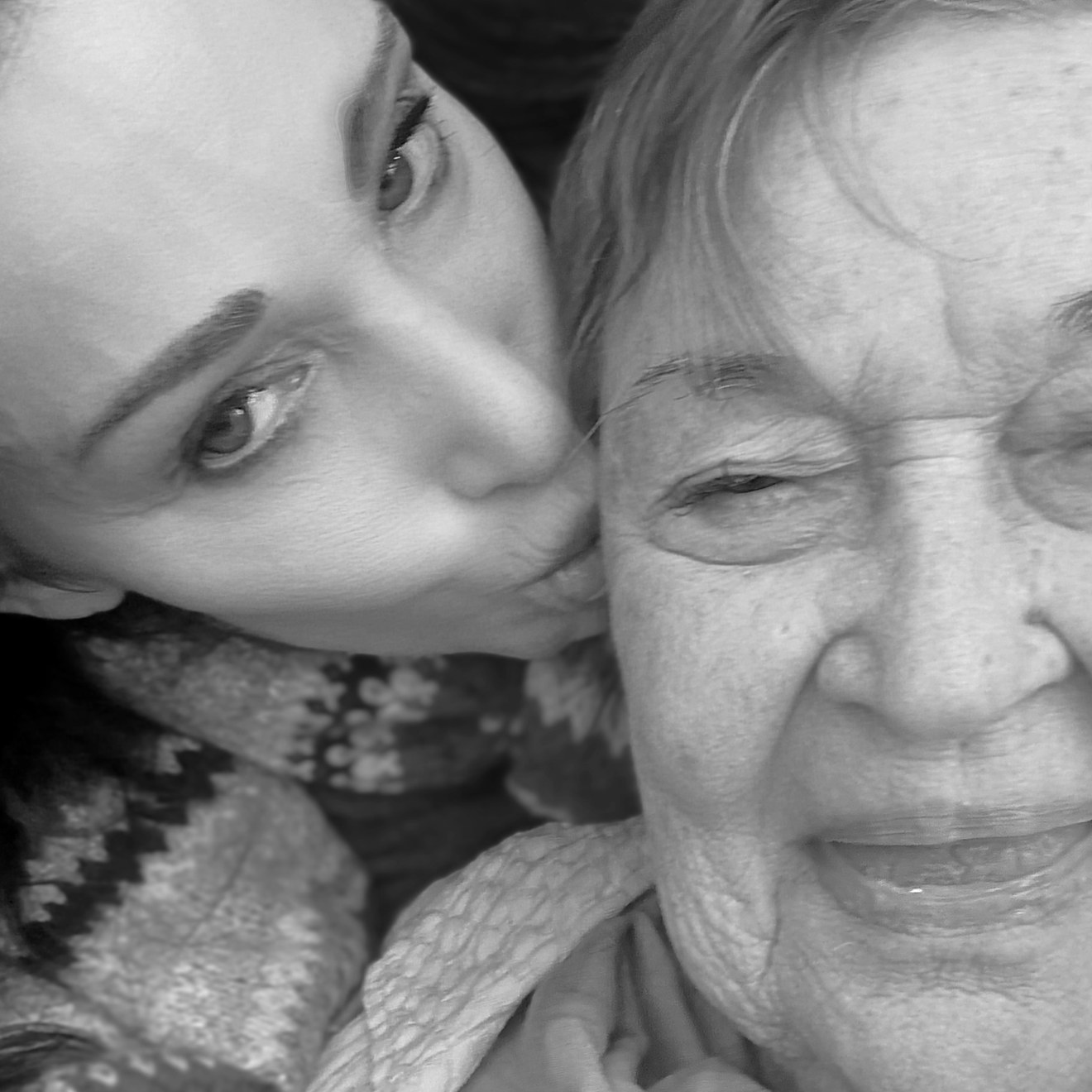
My mother and me.
When someone dies, we speak only of the good times. Only of the qualities worth admiring.
I understand the impulse. I also think it does the relationship an injustice — it gives it less credit than it deserves. A life shared with another person is not improved by editing. It is only made smaller, and easier to summarize, and less like the thing that actually happened.
It leaves no room, either, for what is nearly always true when someone dies: that the ones left behind have regrets. Questions that went unasked. Things that will now never be resolved, because one of the two people required to resolve them is gone.
I would rather make room for that. I would rather say that it is possible to hold all of it — the regret, the unanswered question, the argument that has no ending now — and still move forward, without those ambiguities following me around for the rest of my life.
So, to be clear.
I had fifty-two years with my mother. Like virtually every mother-daughter relationship that has ever existed, many of those years were imperfect. Some of them were considerably worse than that.
It may surprise you to learn that I spent my teenage years living in my father's home, and not with the woman who passed loving pink.
I am not going to recount what happened between my mother and me. The specifics aren't relevant to anyone but the two of us, and one of us is no longer here to give her version. What I will say is this: I was a pre-teen when my parents divorced, and I was the last of five children still living full time in the house.
It was an incredibly difficult time for my mother. In turn, it was an incredibly difficult time for me.
Suddenly the mother I had known seemed to disappear.
Those years were never resolved. Not talked through, not repaired, not agreed upon. They were simply left where they were. Eventually I went to law school three thousand miles away, and there — away from my mother, away from all of them — I became the person I am now. Parts of me come from that family. A great deal of who I am looks nothing like any of them.
Which is why it did not surprise me, once I had time to sit with it, that in her final weeks my mother looked at me and said, you don't fit.
Her thoughts were scrambled. It is highly questionable whether she intended anything at all. And still: she was not wrong, and it was not an insult. It is a description of who I became, and of a woman who looks at the world and talks to the people she loves in a way that does not much resemble the rest of them. There was a time when fitting was the goal. It stopped being the goal a long while ago.
Suddenly the mother I had known seemed to disappear.
That is one true thing.
Here is another. Years later, my mother came to live in my home.
By then we were two women who had both ended marriages. That turned out to matter more than anything either of us could have said about it. She understood that you can be torn about leaving even when everyone around you has already agreed you were right to go. She never once tried to talk me out of being torn.
Somewhere in those years she began wearing pink. Every day. She claimed it — the woman who loves pink — the way you claim something that has always been yours.
I still do not know whether it was. Whether pink had been her favorite color my whole life and I had never noticed, or whether she took it from me. She never said, and I never asked, and I find that I am not troubled by not knowing. It is one of the smaller open files.
A few weeks before she died, with the medication working, we walked to the nail salon and got manicures together. She used her walker to get there. She had earned that walker through more rehabilitation sessions than I can count, because she had decided she was going to keep her independence for as long as it was physically possible to keep it.
That is also a true thing. Both of them are.
And this is why I am not going to sand any of it down. If I tell you only about the manicure, you don't know her. If I tell you only about the years I lived at my father's, you don't know her either. She was not a difficult mother and she was not a perfect mother. There is no category she goes in. There were only fifty-two years of days.
My mother — like me — was imperfect. To take either of our imperfections away is to make us less, not more.
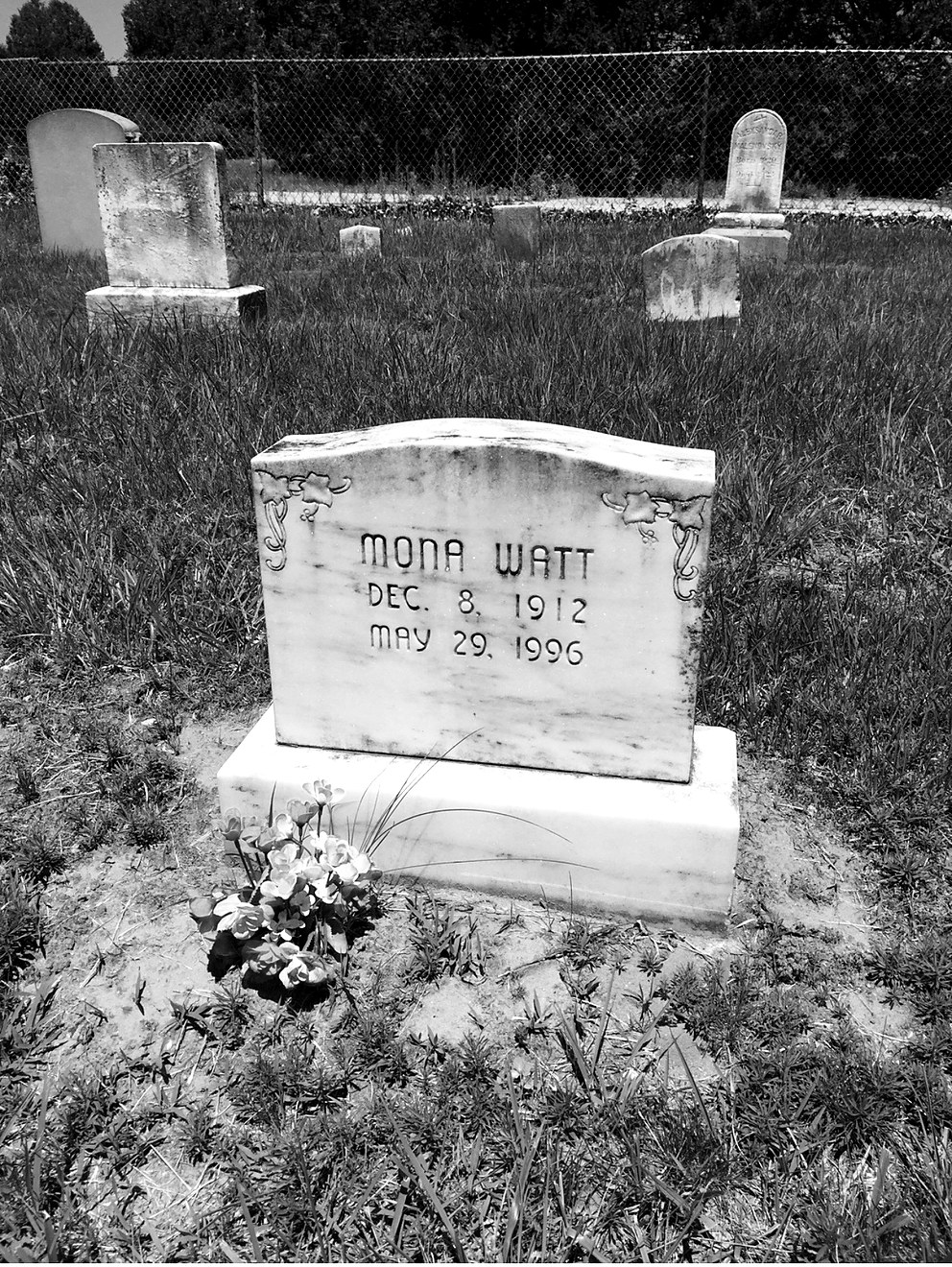
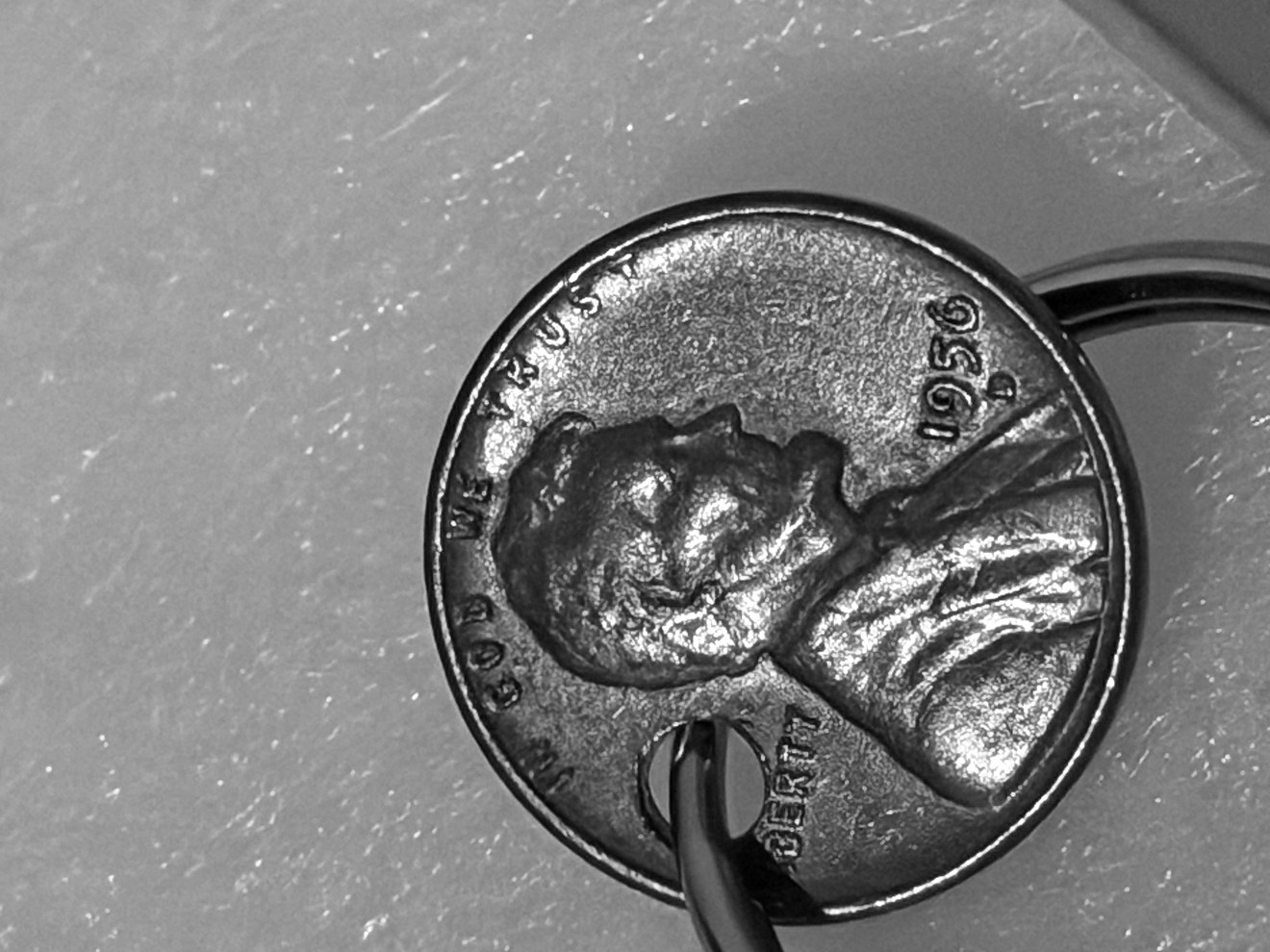
Going through her things after she died, I found a penny from 1956. The year she married my father.
It is on a key ring. Someone drilled a hole through it, just above Lincoln's ear, so that it could be carried. I found it in a small box.
She was divorced from him for as long as she was married to him. She never mentioned it to me.
I have not decided what it means. I am fairly sure I am not going to.
1956. What it meant in 2026 is something only my mother has ever needed to know.
What I know is that my mother was a person — not a role, not a verdict, not a set of years I can add up and produce a number for. Some of what she gave me I would not choose to keep. Some of it I would not give back for anything.
And when I stand at her service, whatever I say will be true. It will also not be the whole of her. It cannot be. It will be one woman's account, from the one seat I ever occupied, and my brothers and sisters will have theirs.
That is not a failure of the eulogy. That is what a person is.
Seven
BY PAULA
Lisena DiBona
I am looking for a woman almost no one wrote anything down about.
I am trying to find out who my grandmother was.
Here is the whole of what I have. She was my father's mother. A large oil painting of her hung in my grandfather's house, so I know her face. She liked poetry, and read it to my father against her husband's wishes — poetry apparently being insufficiently masculine. She was an excellent cook, and taught my father to cook, also against her husband's wishes. She died in her forties of a brain aneurysm, after complaining of headaches that no one paid much attention to. She went into the hospital one day and did not come back. My father was sixteen.
And I knew her first name, because twenty-two years ago my brother named his daughter Lisana — with an a, a compromise, I have always assumed, between him and his wife.
What I did not know, until a few years ago, was her last name before she married. Not because anyone told me. Because I found her the way people find their relatives now, on a website, in a list.
Lisena DiBona.
I don't know whether my family was unusually incurious or whether this is simply what happened to generations of women. Names lost. Stories thinned. Whole lives compressed into wife, mother, widow — three words that describe her relationships to other people and nothing whatsoever about her.
She taught him against instruction, and the instruction lost.
This issue has been about what a daughter can and cannot determine about her mother. About seats, and evidence, and the parts of a person that stay open no matter how long you sit with them. With Lisena there is no seat. Nobody alive occupied one. There is no version of her to sort, no ledger to revise, no house to walk through. There is a face, a language she loved, a thing she cooked, and a cause of death.
So the work is different. It isn't sorting. It's building.
But something did survive her, and it did not travel the way anyone intended. She taught my father to cook when she had been told not to. When she died, my grandfather — with no wife to cook for him — discovered he could tolerate his son doing it instead. My father cooked for the rest of his life. He taught me.
She taught him against instruction, and the instruction lost.
Two generations later, a thing a woman was told she should not be doing is still moving through her family, in the hands of a granddaughter she never met. That is not nothing. It may in fact be the most durable form of inheritance there is — not the name, which was lost inside a marriage, but the practice, which was handed to a boy and kept going.
I intend to find out more about her. Where she was born, who her people were, what she was before she was anyone's wife. I don't know yet what I'll turn up. It is entirely possible that the answer is very little, and that most of her stays where it has been.
For now, this much: she loved poetry and she loved to cook, and she was brave enough to give both away to her son when she had been instructed to do neither.
Welcome back, Lisena DiBona.
Further Reading
Sources for this issue
Adrienne Rich · Of Woman Born (1976)
The book that separated motherhood as an imposed institution from mothering as a particular woman's lived experience.
Plomin & Daniels · Behavioral and Brain Sciences (1987)
Why children in the same family turn out so unalike — the paper that established the nonshared environment.
Margaret Blenkner · Filial maturity (1965)
The origin of the term. With Nydegger's dissent on the timing, and Birditt and colleagues on measuring it.
Cohen & Squire (1980); Squire & Zola, PNAS (1996)
The distinction between declarative and procedural memory — why beliefs are easier to change than habits.
Vivian Gornick · Fierce Attachments (1987)
A daughter and her mother walking New York, arguing and remembering, neither conceding.
On writing a life the record never kept. Her subject is the archive of slavery; the circumstances are not comparable, and this issue makes no such claim.