Il Filo · Issue 06
They are a part of our story. They know the parts that are shared and the parts that are hidden. The complex and cherished bonds women share.
Seven original stories, every Sunday — on the topics worth your time and the questions your other sources haven't thought to ask yet.
Editor's Note
I have been thinking about this issue for a long time. Longer, probably, than I have been thinking about anything else we have published. To create this week's Il Filo, I returned to pieces I wrote over a decade ago — because as our friendships change, so does our relationship to those friendships. What I took from my reflection was that my fundamental views remain the same but that I am more acutely aware of the particular gift that is a friendship that continues even in its absence.
Female friendship is the subject that women discuss most privately and examine least honestly. We have the language for what it looks like at its best — the trusted circle, the women who show up, the friendships that have survived everything life has sent at them. What we have considerably less language for is the full truth of it: the competition that lives inside the love, the friendships that end without ceremony, the things we fail to give each other and the things we have never been taught to ask for.
Most women I know have a small, carefully held group of friends — and in my experience, that list grows smaller over the years, not larger. These are the women who have earned trust over many years and many moments, both joyful and tragic. The ones who know the things you would hide from someone newer. The ones you hand a book to because you trust them with something that cracked something open in you.
This issue is about all of it — the weight and the gift, the reckoning and the reward, the friendship that lasts and the one that quietly stopped. It is also, in the piece that follows this note, about something that happened to me — a conversation with my two closest friends that I have been sitting with ever since, and that is the reason this issue exists.
I am glad you are here for it.
— Paula
By Paula · I
Some of you may have first seen this story on Facebook. I’m glad you’re here for the rest of it.
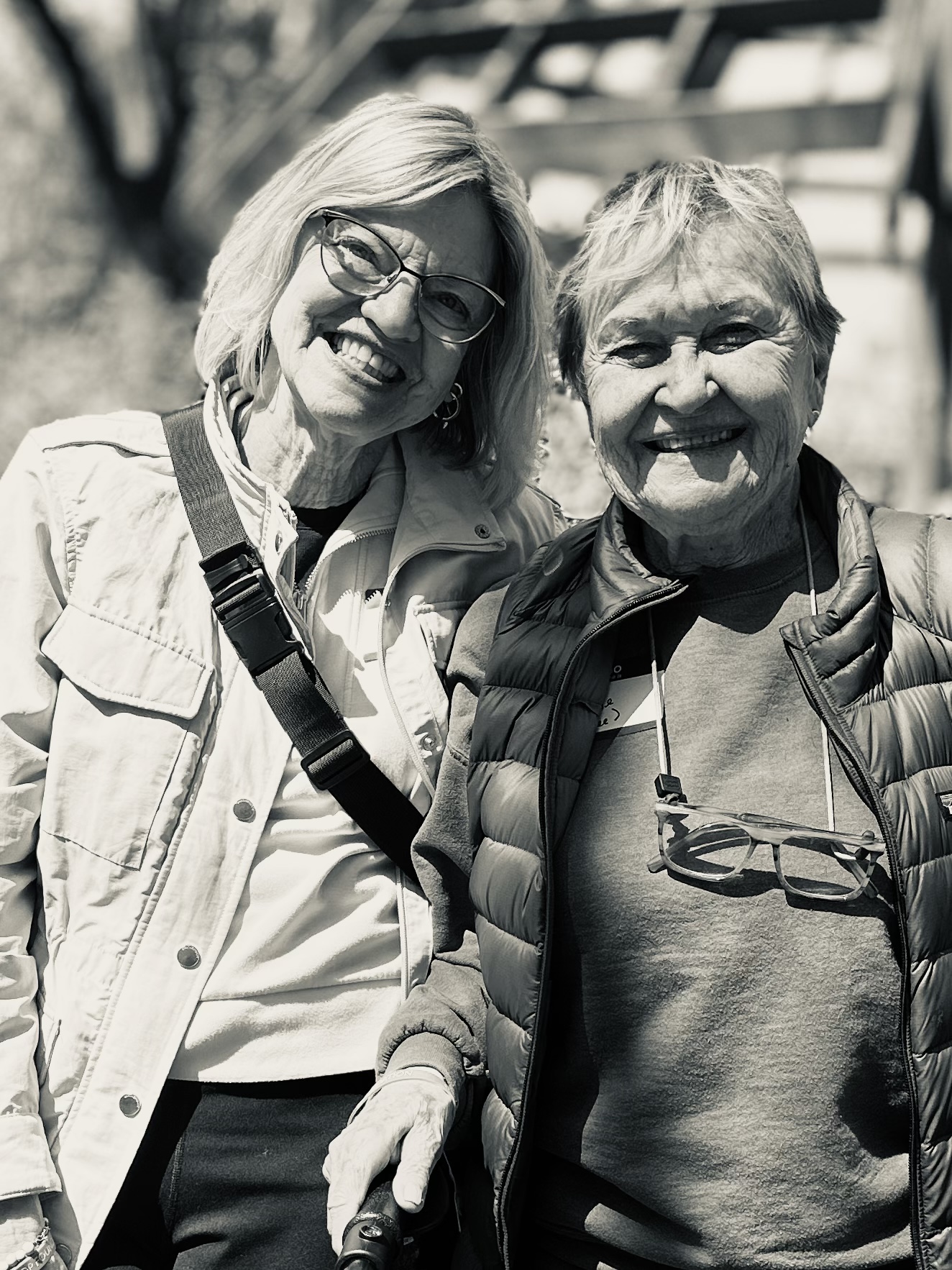
My two closest female friends I found in my twenties — one during college, the other in my first years of practicing law. We are scattered across the country now — California, Colorado and New York.
Virtually everything is different than our lives back then. We have all been married. Then divorced. Then married again — them, not me. As the last unmarried, I may follow their path — I hope so, in fact — but maybe not. Our friendship has not been perfect. The sheer length of it means there have been moments, even months, of anger or hurt. It has survived though, and I suspect that is one sign that our bond is real.
There is a version of this story that is entirely familiar. Three best friends, torn apart by distance and demands, reunited by crisis. Secrets revealed, bonds broken and reforged, everyone emerging somehow improved. That is not this story.
What I will say is that it took my two best friends getting mad at me — together, at the same time, for the same thing — to teach me something I should have understood far earlier. Receiving a jointly drafted email from these two women was not my happiest moment.
At the time I had been going through a difficult period. The specifics aren’t necessary, but one relevant detail is that it involved trips to the hospital.
I have always been a rather private person. More importantly, at that point in my life I had developed what, with the benefit of reflection — and a jointly drafted email — I would now call a martyr complex.
I would not have called it that at the time. I would have attributed my behavior to all sorts of positive qualities: not wanting to bother anyone, being respectful of other people’s time, recognizing that my problems were fundamentally mine alone. In short: being a good person and a good friend.
My friends disagreed. In their view, my longstanding habit of withdrawing when I was struggling — of shutting down communication entirely, much less asking for help — was being a bad friend.
It took me some time to recover from the shock to my own self-image. But it taught me something I have tried to apply in the years since. Friendship is as much about taking as giving. The same is true for love, full stop.
We don’t have to say the words aloud for our loved ones to know we are struggling. By saying nothing, we leave them to worry without an acknowledged challenge to help with. And on some level, not asking for help sends the message that you don’t think their help would be all that valuable.
By confronting me, my friends proved their value yet again. No one likes conflict, and they could not predict how I would react. They cared enough to risk my being hurt. To risk my being angry.
“Silence is not a gift. It’s a theft.”
I meant well. My intentions were good. I think my friends knew that. They meant well. Their intentions were good. I knew that too.
But ultimately it was the confrontation — the hurt and the anger — that made the difference. All the stuff that felt bad. That was the gift.
— Paula
II
Elena Ferrante spent four novels refusing to make female friendship simple. She was the first writer in a long time to trust women with the truth about themselves.
The story begins in Naples in the 1950s, with two girls who recognize each other across a courtyard with the particular intensity of children who understand, instinctively, that they have just met the most important person in their lives. It ends fifty years later, with one woman disappeared and the other still writing — still trying, across thousands of pages, to understand what passed between them and what it cost and what it was worth. In between, Elena Ferrante gives us four novels and the most honest account of female friendship in contemporary fiction.
Honest is the operative word. The Neapolitan novels — My Brilliant Friend, The Story of a New Name, Those Who Leave and Those Who Stay, The Story of the Lost Child — are not a celebration of female solidarity. They are an examination of it, conducted with a precision that is occasionally almost clinical and consistently, unrelentingly true. Ferrante does not make either woman the hero. She does not resolve the competition into simple love or the love into simple competition. She holds both simultaneously, for two thousand pages, because that is what the friendship actually is: the most sustaining relationship of both women's lives, and also the most destabilizing one.
Lenu — Elena, the narrator — is the one who escapes Naples, who gets the education, who becomes the writer. Lila is the one who stays, who is arguably the more brilliant of the two, who becomes the ghost that haunts every page Lenu writes. They compete for everything across fifty years: for intelligence, for beauty, for men, for the right to define what their shared childhood meant. Neither wins. That is precisely the point.
What Ferrante understood, and what most fiction about female friendship conspicuously avoids, is that competition and love are not opposites in a close female friendship. They are, uncomfortably often, the same motion. The woman you admire most is also the woman whose achievements you measure yourself against. The friend whose opinion matters most is also the one whose judgment you most fear. The relationship that has sustained you longest is also the one most capable of undoing you, because it is the one conducted with the least performance and the most exposure. Lenu cannot pretend with Lila. Lila will not allow it. That refusal — to let the friendship be anything other than what it actually is — is both the source of its difficulty and the source of its extraordinary durability.
"Competition between women is good only if it does not prevail; that is to say if it coexists with affinity, affection, with a real sense of being mutually indispensable, with sudden peaks of solidarity in spite of envy, jealousy and the whole inevitable cohort of bad feelings."
Ferrante stated this plainly in her essays, outside the novels themselves. The novels earned that sentence. They also complicated it — because in Lenu and Lila's friendship, the bad feelings are not incidental. They are structural. They are part of what makes the friendship real.
This is what most fiction about female friendship cannot bring itself to say. The genre tends toward one of two versions: the uncomplicated bond, warm and supportive and largely frictionless, which is comforting and entirely false; or the cautionary tale of female rivalry, which acknowledges the competition but strips out the love. Ferrante refused both. Her women are rivals and witnesses, competitors and custodians of each other's history, capable of extraordinary cruelty and extraordinary tenderness, sometimes in the same conversation. The friendship is not good or bad. It is alive.
The women who read the Neapolitan novels and recognize themselves in them — and there are many, across every age and geography — are not recognizing a fantasy. They are recognizing the friendship they actually have, or the one they lost, or the one they are still in the middle of and have not yet found the language for. That recognition is not comfortable. It is something more valuable: the experience of being seen, accurately, in the company of someone who is also being seen.
One woman reads the books. She thinks of two people she trusts enough to hand them something this true. The recommendation is already the beginning of the conversation the novels are asking for — the one about competition and love and the friendship that survives knowing both are present, and chooses to continue anyway.
III
Female competition is not a character flaw. It is a rational response to a rigged game — and the first step to something better is calling it what it is.
Every woman remembers the first time she felt it. Not hatred, not even dislike — something more precise and more uncomfortable than either. The sudden awareness of another girl in the room, and the involuntary calculation that followed. Who is she. What does she have. Where does that leave me.
She was probably thirteen. It has probably never entirely stopped.
Female competition is one of the most universal experiences in women's lives and one of the least honestly examined. The culture has names for it, none of them generous: jealousy, cattiness, insecurity, the thing women do to each other that men somehow don't. What the culture has been considerably less interested in is the underlying logic — because once you examine it, the competition stops looking like a personality defect and starts looking like arithmetic.
When there are two spots and ten candidates, the candidates compete. When the two spots have historically gone to men, and women are newer to the room, the competition among women for the remaining space is not irrational. It is the only sensible response to actual scarcity — of positions, of visibility, of permission to take up space at all. The problem was never that women competed. The problem was that the game was designed to ensure they had to compete against each other rather than alongside each other. Naming that distinction doesn't dissolve the competition. But it does change what you do with it.
The forms it takes shift across a lifetime, which is part of why it's so difficult to track as a single phenomenon. In adolescence it is visceral and immediate — bodies, faces, the architecture of belonging. Who sits where at lunch is a power structure as legible as any org chart, and girls navigate it with a sophistication that is rarely credited as such. The comparison is constant, and it is specifically bodily: thinner, prettier, more. The cruelty of this particular competition is that it takes place most intensely within the closest friendships — Ferrante understood this before the researchers caught up — because the women you love most are also the women whose bodies you involuntarily measure yourself against. Intimacy and comparison are not opposites in female friendship. They are, uncomfortably often, the same motion.
By the time those girls reach the workplace, the competition has migrated from the body to the org chart, but the underlying structure is identical. The woman who takes the credit, the one who doesn't share information, the senior woman who declines to mentor — these behaviors get moralized endlessly as personal failings, as evidence that women don't support each other. What they actually are is the residue of scarcity, still operating in an environment that has changed the rules without fully changing the odds. Queen bee behavior is not a character flaw. It is what happens when there is still, functionally, one seat.
The boy who learned to compete on the field arrived at his first job knowing something the girl beside him didn't.
Competition could be bounded. It could be impersonal. You could want to win badly, play hard, and walk off the field without it meaning anything about the other person or about you. That formation — years of it, starting young — produced a specific workplace fluency that most women were simply never given the chance to develop. The deficit shows up not as lack of ambition but as ambivalence about expressing it: the hedge, the over-qualification, the discomfort with direct competition that gets misread as lack of drive.
Elena Ferrante spent four novels dramatizing this dynamic before stating it plainly in her essays: "Competition between women is good only if it does not prevail; that is to say if it coexists with affinity, affection, with a real sense of being mutually indispensable, with sudden peaks of solidarity in spite of envy, jealousy and the whole inevitable cohort of bad feelings." The novels earned that sentence. So did most women's lives.
The women who have figured this out — and they exist, at every age, in every industry — are not the ones who transcended competition. They are the ones who stopped lying about it. Who could say, to the woman across from them: I see what you have, I want something like it, and I am glad you exist anyway. That sentence, spoken or unspoken, is the beginning of the only kind of female solidarity that actually holds.
IV
The locker room taught women something about friendship that no classroom, no office, and no self-help book ever did. The question is why we stopped building it.
There is a version of female solidarity that gets discussed endlessly — on panels, in think pieces, in the language of "lifting as you climb" — and a version that actually exists, which is sweatier and louder and considerably less photogenic. The second version happens on a field, in a gymnasium, in the last thirty seconds of a game that is tied, when the only thing that matters is what the woman next to you is about to do and whether you trust her to do it.
Team sports gave girls who played them something that almost nothing else in their formation did: a context in which winning was not only permitted but required, in which their bodies were instruments rather than ornaments, and in which the woman beside them was an asset, not a competitor for something scarce. That these lessons didn't automatically transfer into adult life is not a failure of the lessons. It is a measure of how hard everything else worked to undo them.
The body question alone is worth sitting with. Girls absorb, early and continuously, the message that their bodies exist to be evaluated. Team sports interrupted that transmission, however briefly. A girl who has just scored, who is running the field with her arms out, who is being tackled and getting up, is not thinking about how her legs look. She is thinking about what her body just did. Women sometimes describe a version of this revelation arriving with childbirth — the sudden, clarifying knowledge that the female body is capable of something extraordinary. The locker room could have told them that at fifteen.
The competition piece is equally underexamined. Female competition has been so thoroughly pathologized — called jealousy, called pettiness, called a hundred names designed to make women distrust their own ambition — that most women grew up without a healthy model for what competing actually looks like. The field provided one. You played hard against the other team. You wanted to win badly enough to feel it in your chest. And when the whistle blew, it was over — not because you had suppressed something, but because competition on the field is bounded, purposeful, and not personal.
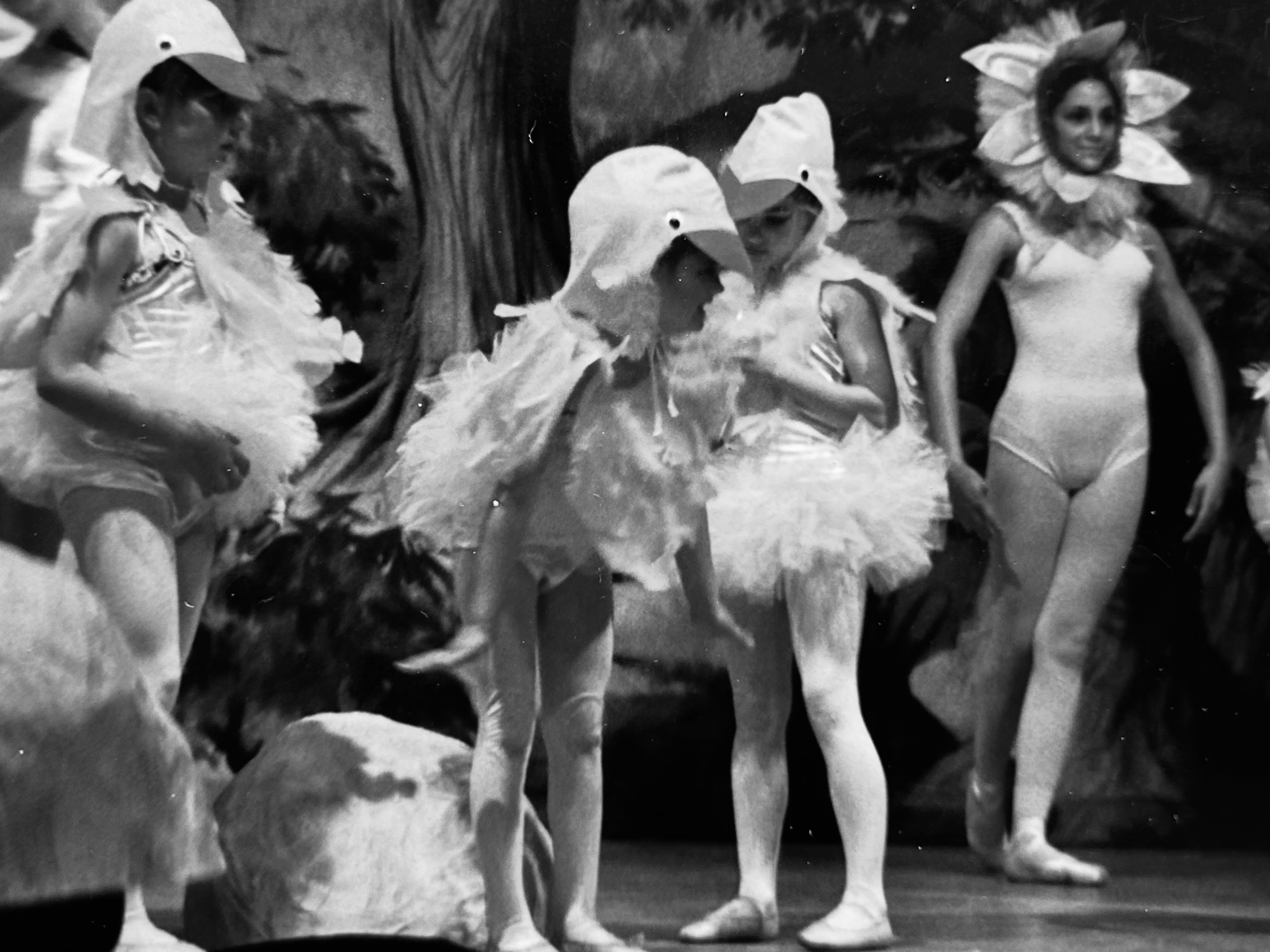
The San Diego Splash. Minimum age to play: 80.
What the locker room produced, at its best, was a specific kind of trust — the kind built not through confession but through shared effort, shared failure, and the particular intimacy of having wanted the same thing at the same time and either gotten it or not. It is not a coincidence that women who played team sports will often tell you, unprompted, that their teammates were the first friendship template that actually worked. Not because those friendships were easy. Because they had structure, and stakes, and a reason to show up that had nothing to do with being likable.
The expectation to participate, not spectate, is worth naming as the gift it was. Most girls were never given it. And even now, with Title IX more than fifty years old and women's sports finally commanding the audiences and the culture they always deserved, the pipeline from playing to understanding what playing taught you remains incomplete. The boy who learned to compete on the field arrived at his first job knowing something the girl beside him didn't — that winning was not a character flaw, that competition was bounded and impersonal, that wanting something badly was not the same as being unkind. Girls are on the field in greater numbers than ever. Whether they are being helped to translate what they learn there into the friendships, the workplaces, the lives they are building — that is a different question.
The team is the point. It was always the point. The mistake was thinking the lesson ended when the season did.
V
At a certain point, a woman stops counting her friends and starts knowing them. That is not a loss. It is the most important editing she will ever do.
There is a specific kind of friendship that deserves to be named before anything else — not because it is rare, but because it is so easily taken for granted until it isn't there. The friendship that has lasted long enough to hold the evidence. The woman who has met your mother, your father, your siblings — who understood something about you from that meeting that you never had to articulate, because she already knew. Who was there for the version of you that existed before you decided who you were going to be. You cannot perform for her. The performance would be immediately, almost affectionately, transparent.
These are the friendships in which honesty is not a virtue you practice but a condition you cannot escape. She already knows the things you would hide from someone newer. She knows the motivations that would require too much context to explain to anyone else. She has watched you make choices — good ones and terrible ones — with full knowledge of what drove them. That is not comfortable in the way that easier friendships are comfortable. It is something more valuable: a relationship in which you are known, rather than merely liked.
And because these friendships are built on so much more than proximity or habit, they can survive something that newer friendships often cannot: absence. Life requires us to focus elsewhere — on children, on parents, on work, on the particular emergencies that arrive uninvited and consume everything for a year or two. The long friendship does not require maintenance in the way that newer ones do. It requires only the knowledge, held by both women, that the other one is still there. You can go silent for two years and return to the middle of a sentence. No explanation is asked for because none is needed. The assumption of continuity — that she is still herself, still yours, and still waiting for the thread to be picked up — is itself the proof of what has been built.
This is what the standard is for. Not perfectionism, not a ruthless audit of who is worth your time.
But the knowledge, earned over years, of what it feels like to be genuinely known by another woman — and the refusal, hard-won and entirely reasonable, to settle for less.
There is no ceremony for a friendship that ends. No announcement, no acknowledgment, no socially recognized form of grief. A marriage that dissolves has a name and a legal architecture. A friendship that quietly stops being one has nothing — just the slow accumulation of unreturned texts, the lunch that never gets scheduled, the gradual realization that you have stopped trying and so has she. The culture has no language for this, which means most women carry these losses in a kind of unnamed suspension, not quite grieving something they were never told they were allowed to mourn.
But the culling is not only loss. That is the part that goes unexamined.
Something shifts in a woman's relational life — not at a fixed age, not triggered by a single event, but somewhere in the accumulation of experience — and she begins to know the difference between a friendship and a habit. Between a woman who knows her and a woman who knows her role. Between the friend who calls when something breaks and the friend who only appears when something is being celebrated. Once you know that difference, the substitutes become very difficult to maintain without a low-grade sense of dishonesty on both sides. The culling is simply what happens when a woman stops pretending she can't tell.
This is not scarcity forcing her hand. It is clarity. The woman at fifty who has three friends she would call at midnight has something the woman at twenty-five with forty contacts in her phone does not — and she knows it.
The forces that make the culling visible are worth naming. Geographic distance, caregiving, career pressure — these create the conditions under which friendships sustained by proximity finally have to sustain themselves by something else. Many don't. But the culling that matters is not the one that happens because life intervened. It is the one that happens because a woman finally has enough experience of real friendship to recognize when she is not in one.
The professional-versus-mother fault line is one of the most common culling mechanisms and one of the least honestly discussed. Friendships that predate the divergence — the woman who built a career, the woman who stepped back — can survive the different choices. What they frequently cannot survive is the quiet judgment that accumulates around them. Neither woman is necessarily conscious of it. But each has made a choice in a culture that has never fully validated either option without qualification, which means each is, on some level, defending her own life by measuring it against her friend's. The friend becomes the mirror that must be managed. By the time both women are fifty, the friendship has often simply become too much work — not because anything was said, but because too much was perpetually left unsaid.
Then there is the harder category: the friendships that reveal themselves when the social scaffolding changes. Divorce removes a marital identity and a set of couple-friendships almost simultaneously. A job loss removes a professional identity. An illness removes the performance of wellness. Any transition that strips a woman of a title or a social role has a way of clarifying, with uncomfortable speed, which friendships were actually about her. The ones that don't survive that clarification are their own particular grief — not because the friendship was great, but because its absence confirms something she suspected and hoped was wrong.
What she is left with, after the culling — deliberate and involuntary, chosen and revealed — is a smaller number of friendships that ask something real of her and give something real in return. Friendships where the standard is high because both women have learned what the standard should be. Where showing up means something because it is no longer automatic.
This is not a consolation for loss. It is a different thing entirely: the quiet confidence of a woman who has stopped spending herself on friendships that were always more performance than presence, and knows, without apology, the difference.

VI
The women who make it to eighty still loud, still dressed, still showing up for each other did not get there by accident. Neither did the friendship.
The earlier draft.
Ari Seth Cohen started photographing older women on the streets of New York in 2008 because he was looking for something the fashion world had decided didn't exist: women past a certain age who were still, visibly, gloriously themselves. What he found, and what his Advanced Style project has been documenting ever since, was not just individual women with exceptional taste. It was women in groups — friends who had been dressing for each other, and with each other, for decades. Women who showed up to lunch in full maximalist regalia not because anyone was watching but because they always had, and because the friend across the table expected nothing less. The shared aesthetic was not vanity. It was a forty-year conversation conducted in color and silhouette, still ongoing.
This is one version of what it looks like when a female friendship survives everything life sends at it and comes out the other side still recognizable, still vital, still — in the most literal sense — dressed for the occasion.
The research on what that survival produces is substantial and largely undersold. Female friendship is one of the strongest predictors of healthy aging among women — more reliable, in some studies, than diet, exercise, or even the presence of a romantic partner. The mechanism is not simply emotional: close social bonds among women are associated with lower cortisol levels, stronger immune function, and measurably longer life. A landmark UCLA study identified what researchers called the "tend and befriend" response in women under stress — the instinct to seek out other women, to talk, to connect — as a biological counterpart to the fight-or-flight response, with its own distinct hormonal signature. Women, it turns out, are physiologically designed to need each other. The culture just forgot to mention it.
For women who are aging without partners — by choice, by circumstance, by the simple mathematics of outliving — the friendship infrastructure is not supplementary. It is the primary architecture. The soloager who arrives at seventy with two or three deep, durable friendships has built something that functions, in every meaningful way, like a family: shared history, mutual accountability, the reasonable expectation that someone will show up. The one who arrives at seventy having spent the previous decades treating friendship as the thing she got to after everything else has a different experience of what comes next.
What the women who make it to eighty together will tell you, if you ask them, is not that the friendship was always easy. It is that they kept choosing it. Through the marriages and the divorces, the children and the losses, the years when geography or circumstance made everything harder, the disagreements that could have ended it and didn't. The friendship survived not because it was frictionless but because both women, repeatedly and sometimes stubbornly, decided it was worth the friction. That decision, made at thirty and forty and fifty and sixty, is what produces the woman at eighty who still has someone to call, still has someone who remembers, still has someone sitting across the table who knows exactly why she dressed that way today.
There is a particular quality to the long friendship in age that younger friendships cannot replicate and that nothing else quite substitutes for: the friend who knew you before you became whoever you are now. Who remembers the earlier drafts. Who can say, with complete authority, that the woman you are at seventy-eight is recognizably the woman she met at nineteen — changed, yes, accumulated, yes, but continuous. That continuity is not a small thing. It is, for many women, the closest thing they have to a complete record of their own life.
Still there.
The new friendships are real. They are simply not the same thing. What is missing is the witness — the woman who was there for the earlier drafts, who holds the continuous record, who requires no introduction to the person you used to be.
The women in Cohen's photographs are not making a statement about aging. They are making a statement about persistence — the persistence of self, of style, of the friendship that has been witness to both. They got dressed this morning because they always get dressed. They showed up because they always show up. And the friend across the table, in the equally improbable hat, got dressed and showed up for exactly the same reason.
This is what forty years of choosing looks like.
VII
We learned how to be daughters, wives, mothers, professionals. No one taught us how to be friends. That was always the gap — and it was always the most expensive one.
There is a syllabus, formal or otherwise, for almost every significant relationship a woman will have in her life. Her relationship with her parents is shaped by decades of cultural instruction — what she owes them, what they owe her, when to let go and when to hold on. Her romantic relationships come with an entire architecture of social expectation, literary precedent, and institutional support. Her relationship with her children is the subject of a publishing industry, a medical establishment, and the unsolicited opinions of essentially everyone she has ever met.
Her friendships get none of this. They are assumed to be self-managing — natural, instinctive, the thing that just happens between women who like each other. When they fail, or falter, or quietly stop being what they were, there is no framework for the loss and no language for the repair. The friendship that ends badly has no legal process and no social ceremony. The friendship that ends silently has not even that.
What this issue has tried to argue, across seven pieces and the full arc of a woman's life, is that female friendship is not self-managing. It is one of the most complex, most consequential, and most underexamined relationships most women will ever have. It requires the same skills as any other high-stakes relationship — honesty, accountability, the willingness to show up when showing up is inconvenient, the willingness to be shown up for. It requires the capacity to tolerate competition without letting it become corrosive, to survive absence without mistaking it for abandonment, to tell the truth to someone who already knows enough about you to know when you're lying.
Most of us were never taught any of this. We were handed the friendship and left to figure out the rest.
The cost of that gap is not abstract. It shows up in the friendships that died because no one knew how to repair them. In the senior women who declined to mentor because the system never modeled anything else. In the women who arrived at sixty having spent forty years treating friendship as the residue of their schedule — the relationship that got what was left after everything else made its claims — and discovered, too late, that what was left was not very much.
It also shows up in the ones who got it right. Who built something durable and honest and occasionally very difficult, and who are still there at eighty, still dressed for the occasion, still picking up the sentence where they left off two years ago. Those women did not stumble into that. They chose it, repeatedly, with full knowledge of what it cost and what it was worth.
What choosing looks like, in practice, is less ceremonial than we tend to imagine.
It is a book passed between friends with their notes in the margins — not a book club with a date on the calendar, but a conversation conducted slowly, in handwriting, across weeks. It is two women working on entirely separate things and checking in on each other's progress, because shared accountability does not require shared activity. It is a letter written once a year on a fixed date, because the discipline of having to articulate the year to someone who knew you before it started is its own form of intimacy. It is a set of questions — the ones you have never thought to ask even your closest friend, the ones that require more than a dinner to answer — sat with together, once, and then returned to. Not an exercise. A practice.
The friendship that lasts is not a gift. It is a decision — made at twenty and forty and sixty and again at every point where it would have been easier to let it go. What we were never taught, we can still learn. The women who built the real thing were not born knowing how. They just kept choosing until choosing became the only thing that made sense.
The Neapolitan Novels
The definitive fictional account of female friendship in its full complexity — competitive, sustaining, and entirely honest about being both.
Bad Friend: How Women Revolutionized Modern Friendship
A cultural historian's blend of memoir and history that refuses to gloss over the difficulty — and argues for a new paradigm of friendship that accepts imperfection as the condition of the real thing.
Woman's Inhumanity to Woman
Exhaustively researched and still essential: the psychologist and feminist scholar's unflinching examination of indirect aggression among women — and the structural forces that produce it.