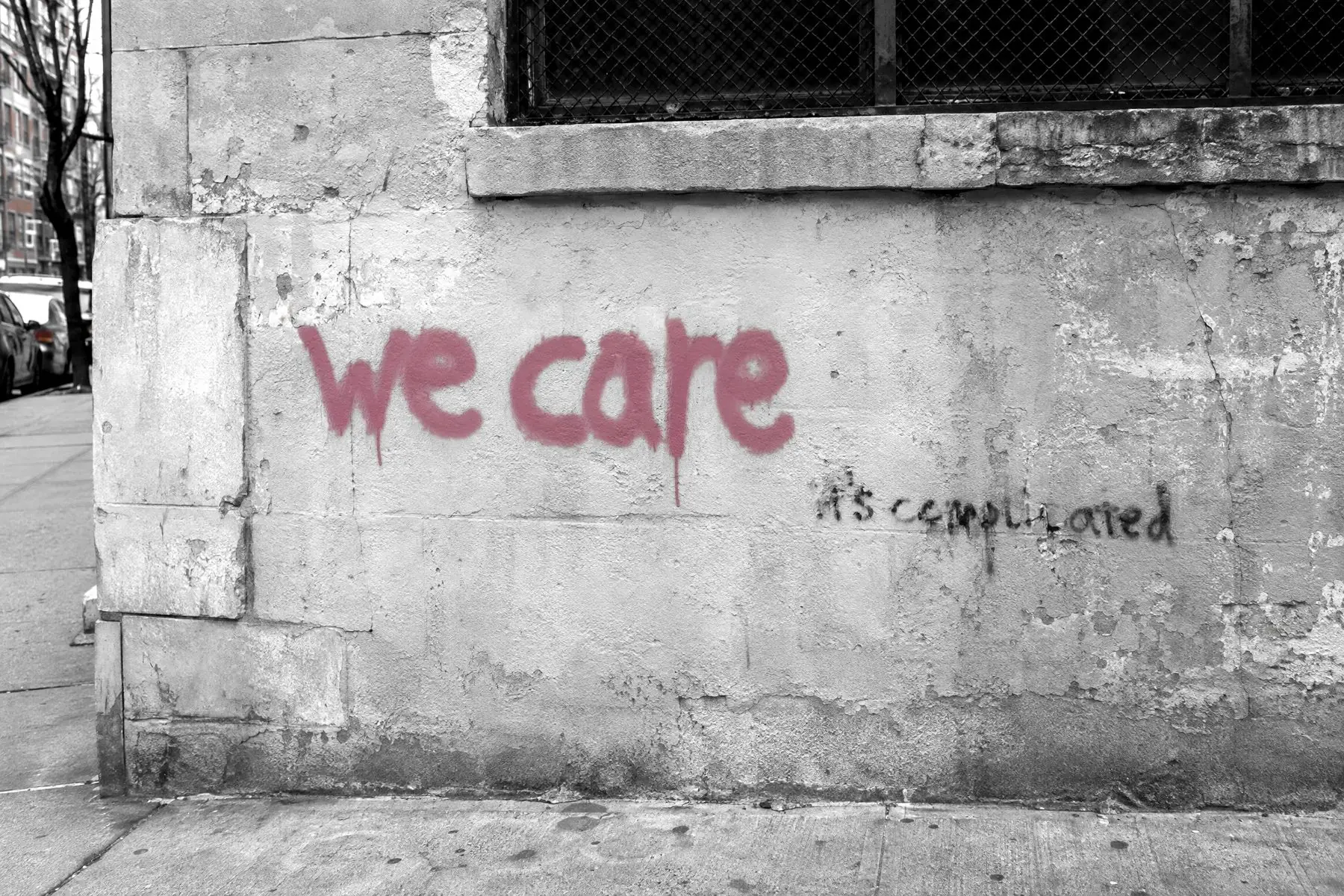
Caring. It’s Complicated.
On “we don’t care,” the women it frees, the women it leaves out, and the right to care anyway.
Most of you have likely heard the message by now: women over forty don’t care.
There are variations, of course. We do whatever we want. We are singularly independent because we grew up taking care of ourselves. We are done with obligations. We are definitely done with expectations.
These messages are intended as empowerment, and in an important sense that is exactly what they deliver. They give women permission to stop trying to please everyone, something many of us have spent most of our lives doing. They give us clear words for our frustration with the many roles we are expected to perform — mother, daughter, employee, caretaker, wife — all at once. With a smile and shiny hair, to boot.
There is relief in being told we can stop. And in discovering how many other women would like to stop too.
But I wonder what it means that “not caring” is the hook I keep finding when I search social media for “women over forty.” At what point does “you don’t have to care” become “women like us don’t care”? Or worse, “women like us shouldn’t care”?
Because here is my truth:
I do care.
Sometimes by choice and sometimes not. When I care by choice, I don’t want to have to defend that. When I care because I have no other choice, I want — and may need — support in that moment.
And sometimes the choice is more complicated than even that suggests. Choosing to care for someone does not mean choosing every demand that caring for them brings. Choosing to care about how I look does not mean accepting judgment on the days I choose not to.
And then there are the women who hear these messages and wonder why they haven’t yet arrived at the liberated stage of life their peers seem to have reached. I doubt any of us want “not caring” to become one more thing we feel we haven’t gotten quite right.